
Austin buyers expect speed to market. The city has a large software and start-up community, so product teams are used to short cycles, public roadmaps and quick customer feedback. We structure the work in two-week sprints with a demo at the end of each, so you can put a working slice in front of real users early and change direction when they tell you something unexpected.
Serving Austin teams remotely from Udaipur, India
Web app development company in Austin for products that have to scale
Looking for a web app development company in Austin? IPrix Media builds SaaS products, customer portals and internal dashboards for US teams, working remotely from Udaipur, India in clear sprints with working software at every demo.
- SaaS, portals and dashboards
- Sprint demos every two weeks
- Clean, documented code
- You own the repository
 Photo: Tony Webster, CC BY 2.0, via Wikimedia Commons
Trusted by growing brands
Overview
What custom web application development means
A web application is software that people use in a browser: a customer portal, a booking system, an analytics dashboard, a marketplace or a full SaaS product. Unlike a brochure website, it has user accounts, a database, business rules and integrations with other systems. Building one well means deciding the data model, the permissions, the user flows and the deployment setup before screens are polished.
IPrix Media is an agency based in Udaipur, India. We build web apps for founders and operations teams in the United States, including Austin, and we work remotely. This page explains how we approach an app build, what to decide early and how to run a project across a long time-zone gap.
- Web app development company in Austin
- Custom web application development in Austin
- SaaS application development services for Texas startups
- Business web app developers for US companies
- Custom dashboard and portal development
- Web app development with SOC 2 ready practices
Local context
What US and Austin product teams should plan for
Privacy rules are a patchwork. The United States has no single federal privacy law for most businesses. Instead, states set their own rules, including California and Texas, and the details change with the type of data and the size of the company. If your app stores personal data, we design for data minimisation, clear consent, export and deletion from the start, because adding them later costs far more. We build to those requirements, but you should confirm legal obligations with your own counsel.
Enterprise customers ask for proof. Larger US buyers often send security questionnaires and ask whether you hold a SOC 2 report. A web app does not need the audit on day one, but it should be built so that the audit is possible: role-based access, audit logs, encrypted data, backups, separate environments and written change control. We build these in by default. Accessibility also matters, because US businesses face legal claims over inaccessible websites, and WCAG is the usual benchmark, so we test key flows with a keyboard and a screen reader.

Sources
We configure what you decide. We do not give legal or tax advice.
What is included
What is included in our web app builds
Product discovery
Workshops to define users, jobs to be done, the first release and the metrics that show it is working.
UX and interface design
Flows, wireframes and a clickable prototype tested with a few real users before development starts.
Front end and back end
Modern JavaScript and TypeScript front ends with an API and database designed for your data and growth.
Integrations
Payments, email, CRM, analytics, authentication and third-party APIs connected and tested.
Cloud setup and DevOps
Staging and production environments, automated deploys, monitoring and backups on your own cloud account.
Testing and handover
Automated tests for core flows, documentation, and a walkthrough for your engineers.
Why choose IPrix Media
Why US teams build with IPrix Media
Most agencies sell activity. We are built around outcomes you can see in your own analytics.
Working software early
Every sprint ends with something you can click, so risk shows up in week two, not month six.
Full product skills
Design, development, SEO and marketing sit in one team, so the app is built to be found and used.
Code you control
The repository, cloud account and credentials belong to you from the first commit.
Straight communication
Weekly written updates, a shared board and honest notes when a feature is harder than expected.
What matters
Typical agency
IPrix Media
Reporting
Vanity metrics and screenshots
Leads, revenue and ROAS tied to your goals
Strategy
Generic templates for every client
A plan built around your margins and funnel
Team
Pitched by seniors, run by juniors
Specialists work directly on your account
Contracts
Long lock-ins with no checkpoints
Clear scope with performance checkpoints
Tracking
Platform numbers taken at face value
Clean tracking set up before spend scales
Our process
How an app project runs
Discovery and scope
We map users, flows and risks and agree what goes into the first release.
Design and prototype
You approve a clickable prototype and a technical plan before the build starts.
Sprint development
Two-week sprints with a demo, a short written report and a refreshed plan each time.
Testing and launch
We test across browsers and devices, load test key flows, and run a staged launch.
Support and iteration
After launch we fix issues quickly and plan the next releases from real usage data.
Practical guide
Practical information before you start
Time zones
Austin is 10.5 to 11.5 hours behind India depending on daylight saving, so the overlap is small. Your early morning matches our evening. We hold sprint demos and planning calls then, and the team works while you sleep, so you start each day with progress to review.
Timeline
A focused first release usually takes eight to sixteen weeks, depending on integrations, roles and reporting. We give you a dated plan once discovery is complete.
Cost drivers
The number of user roles, integrations, screens and compliance needs set the scope. We provide a written estimate after discovery and do not use fixed price lists.
| App type | Typical first release | Key decisions |
|---|---|---|
| Customer portal | Login, account data, requests, notifications | Authentication, permissions, integration with billing or CRM |
| Internal dashboard | Data views, filters, exports, roles | Data sources, refresh rate, who can see what |
| SaaS product | Sign-up, core feature, subscription billing | Multi-tenant design, pricing model, analytics |
| Marketplace | Listings, search, payments, reviews | Trust and safety, payouts, dispute handling |

Our work
Relevant work
These projects from our portfolio show the web builds and platforms we deliver. They are examples of our work, not Austin clients.
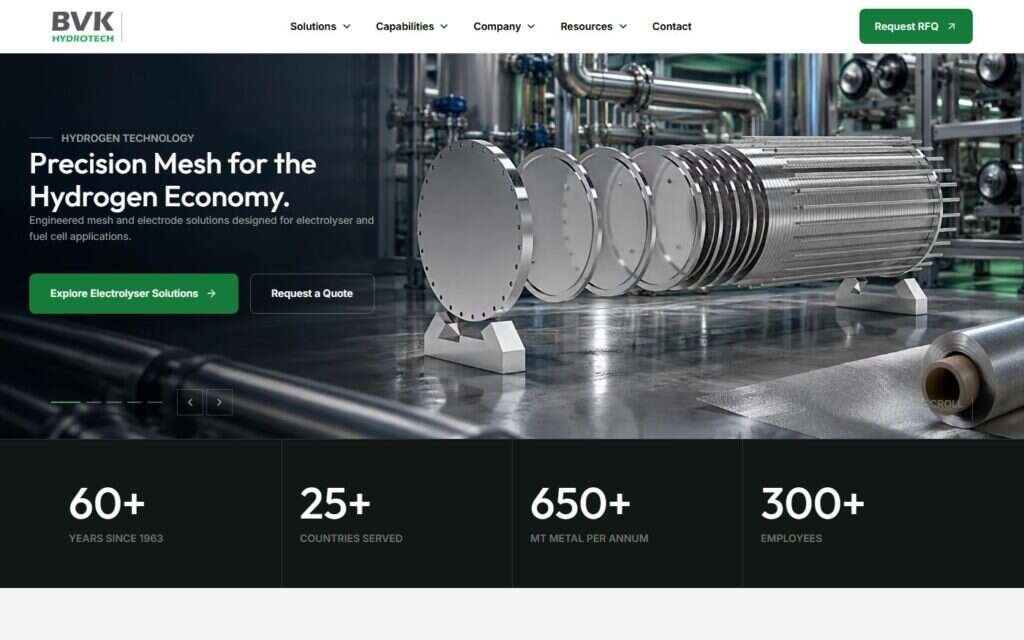 Headless website
BVK Hydrotech
A precision-mesh manufacturer for the hydrogen economy. Next.js frontend on a headless WordPress backend, where every word, image and menu item is edited in WordPress. Next.jsWordPressWPGraphQLTypeScript View project Visit live site E-commerce storefront
Graha Kavach
A fast fire-safety store. A Next.js storefront on WordPress and WooCommerce, with custom cart and checkout, shipment tracking and SEO built in. Next.jsWooCommerceWPGraphQLACF View project Visit live site Business website
Rasm Weddings
A destination wedding planner in Udaipur. A premium, image-led website built to rank for wedding planning searches and bring in enquiries. Next.jsSEOWordPress View project Visit live siteClient reviews
What clients say about working with IPrix Media
“From campaign setup to optimisation, everything was data-driven. We saw a noticeable improvement in conversions and overall performance. Definitely a team that understands performance marketing.”

“IPrix Media helped us structure our digital marketing the right way. Better creatives, better targeting, and regular optimisation made a clear difference in our online sales.”

“We finally started getting quality enquiries instead of random traffic. Their SEO and ad strategy brought people who were actually ready to buy. The team is responsive and performance-focused.”

FAQs
Web App Development in Austin: common questions
Straight answers to what businesses ask before they hire an agency.
Do you have an office in Austin?
No. IPrix Media is based in Udaipur, India. We build web apps for US clients remotely, with sprint calls at the start of your day.
Who owns the code?
Your repository and cloud account are created in your name from the start, and ownership of the delivered code is agreed in the written proposal.
Can you build an MVP quickly?
Yes. We scope the smallest release that tests your main idea with real users, which often takes two to four months, and then build on what you learn.
Which technologies do you use?
We commonly use React and Next.js with TypeScript on the front end, and Node.js, PHP or Python on the back end with PostgreSQL or MySQL. We pick what fits your product and team.
Can you work with my in-house engineers?
Yes. We can work alongside your team, follow your code review rules and hand over documentation your engineers can use.
How do you handle security?
We use role-based access, encrypted data, separate environments, dependency updates and logging. If you need a formal audit, we build with that in mind, and an auditor does the certification.
Free consultation
Tell us about your web app development project
Share your goals and your current setup. We reply within one business day with next steps, not a generic sales pitch.